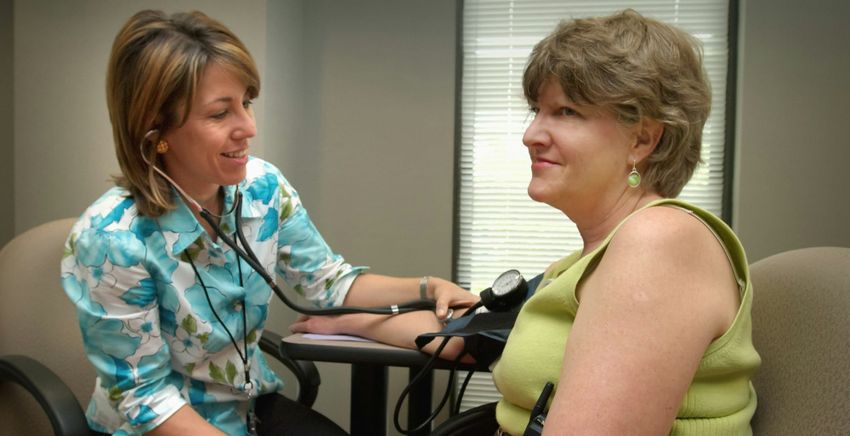
Get a validated upper-arm blood pressure cuff and take a week of home readings. Your home average, not one office reading, is the number worth knowing.
The 2025 American Heart Association and American College of Cardiology guideline sets the treatment goal for all adults at under 130 over 80, and encourages a top number under 120.
Normal is under 120 on top and under 80 on the bottom. Elevated is 120 to 129 on top with the bottom still under 80.
Stage 1 hypertension starts at 130 on top or 80 on the bottom. Stage 2 starts at 140 on top or 90 on the bottom.
Office readings can mislead, so the guideline recommends readings outside the clinic to confirm a diagnosis, and home readings to guide medication changes.
Blood pressure matters for your brain too. The guideline recommends a top number under 130 in people with high blood pressure to help prevent mild cognitive impairment and dementia.
Here is the move. Check that your cuff appears on the US Blood Pressure Validated Device Listing at validatebp.org, and skip wrist cuffs and smartwatches.
Sit quietly for five minutes first, back supported, feet flat, legs uncrossed, arm at heart level and cuff on bare skin. Take two readings a minute apart, morning and evening, for seven days.
Average all readings, top and bottom separately. Bring the log and averages to your next appointment.
If your average is 130 over 80 or higher, ask: “Can you calculate my PREVENT risk score and tell me whether I should start with lifestyle changes or medication?”
For stage 1 readings, the guideline weighs that score alongside diabetes, kidney disease, heart disease or a past stroke. With none of those and a ten-year risk under 7.5 percent, you start with three to six months of lifestyle changes.
At 140 over 90 or higher, the guideline recommends medication along with lifestyle changes for everyone.
If your top number is over 180 or your bottom number is over 120, wait a minute and measure again. If it is still that high, call your doctor right away.
If a reading that high comes with chest pain, shortness of breath, back pain, numbness, weakness, vision changes or trouble speaking, do not wait to recheck. Call 911.
You cannot manage a number you only see twice a year. A week of home readings gives you a far more reliable one.